
Marie-Josée Michaud
Executive Coach | High-Stakes Leadership Strategist | Emotional Intelligence
Under Pressure, We Become More Reactive
Under pressure, we often find ourselves triggered more easily.
This is not surprising, especially as we become increasingly aware of the neuroscience behind how our brains respond to stress.
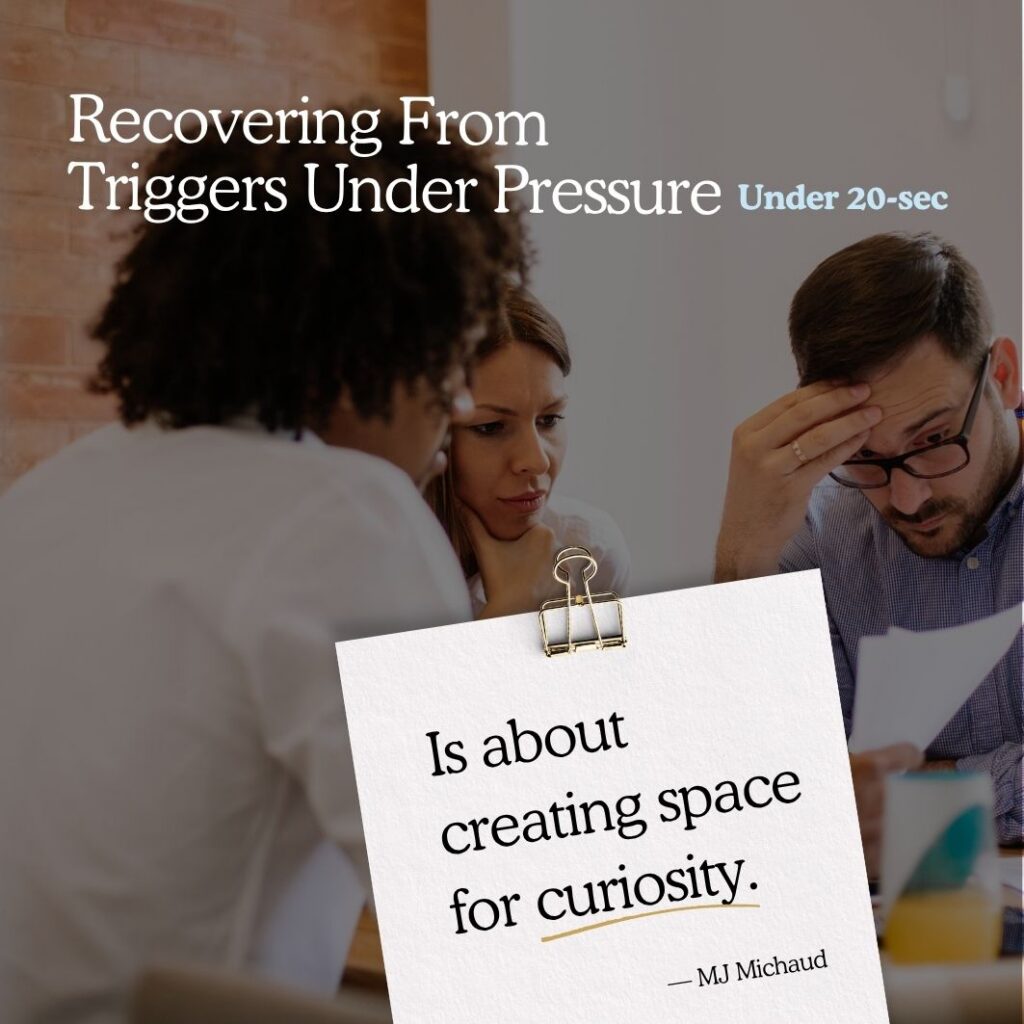
The Critical 20 Seconds After a Trigger
I recently read a post by Mignon Walder highlighting a growing leadership trend focused on improving recovery speed within the critical 20 seconds after being triggered. During that time, she notes that competitors may use the pause to identify your vulnerabilities, read the room more effectively, and shape the next move.
The Additional Layer of Pressure
What strikes me after reading this is that once we become aware of this initial dynamic, being triggered carries an additional layer of pressure. We are no longer only trying to regulate our own internal sense of threat, but also dealing with the awareness that others may read, interpret, or even benefit from our moment of vulnerability.
That dual pressure can make it even harder to regain clarity, confidence, and perspective within such a short 20-second timeframe.
The Body as a Way Through
But there is also a way through it: your body.
Learning to recognize your body’s signals immediately after being triggered can make a real difference. Whether it is the fear of appearing incompetent, exposed, or vulnerable, noticing how fear shows up physically allows you to work with the emotion without needing to overanalyze it cognitively in the moment.
The first step is simply to acknowledge the fear — and breathe. Whether the fear is amplified by external dynamics or not, it is still fear.
Creating Space Before Reacting
For example, in a meeting, when faced with a difficult or confrontational question, you could respond:
“This is a very interesting question. May I ask what your intention is behind it? I would love to understand better so I can respond more thoughtfully.”
This not only gives you valuable time to recover, but also helps you determine whether the threat is actually real or partly a projection of your own self-doubt.
Curiosity as Leadership
Creating space for curiosity is essential. And who knows — this simple question may not only help you face your own vulnerability, but also create space for others to express their own fears.
That, to me, is strong leadership.
Curiosity invites listening, understanding, and connection. It also encourages honest reflection about where we still need to grow — and communicating that openly can build both trust and credibility.
Leadership Is Not Perfection
Perfection is unattainable, especially under pressure.
When we stop trying to hide our imperfections, we create stronger, more grounded, and more meaningful connections.
Maybe that is what strong leadership really is under pressure: not eliminating vulnerability, but staying present enough to transform the dynamic around it.
Emotional Intelligence Is a Long-Term Practice
That being said, these first steps are only the beginning. They create enough space to recover in the moment — until you put curiosity to good use again and begin exploring the deeper roots of your triggers.
That deeper work is part of developing emotional intelligence, and it can absolutely be integrated into a leadership journey. The sooner, the better.
Because sometimes, the strongest thing we can do as leaders under pressure is not react faster — but develop enough emotional intelligence that triggers no longer find their way so easily.
Find out about Developing your EI Program here.
IF RELEVANT- PLEASE SHARE!