OPPI PERSPECTIVE LENS™ BY MJ MICHAUD
A Link Between
Intention, Perceptions and Impact
Organizational outcomes are shaped by perceptions
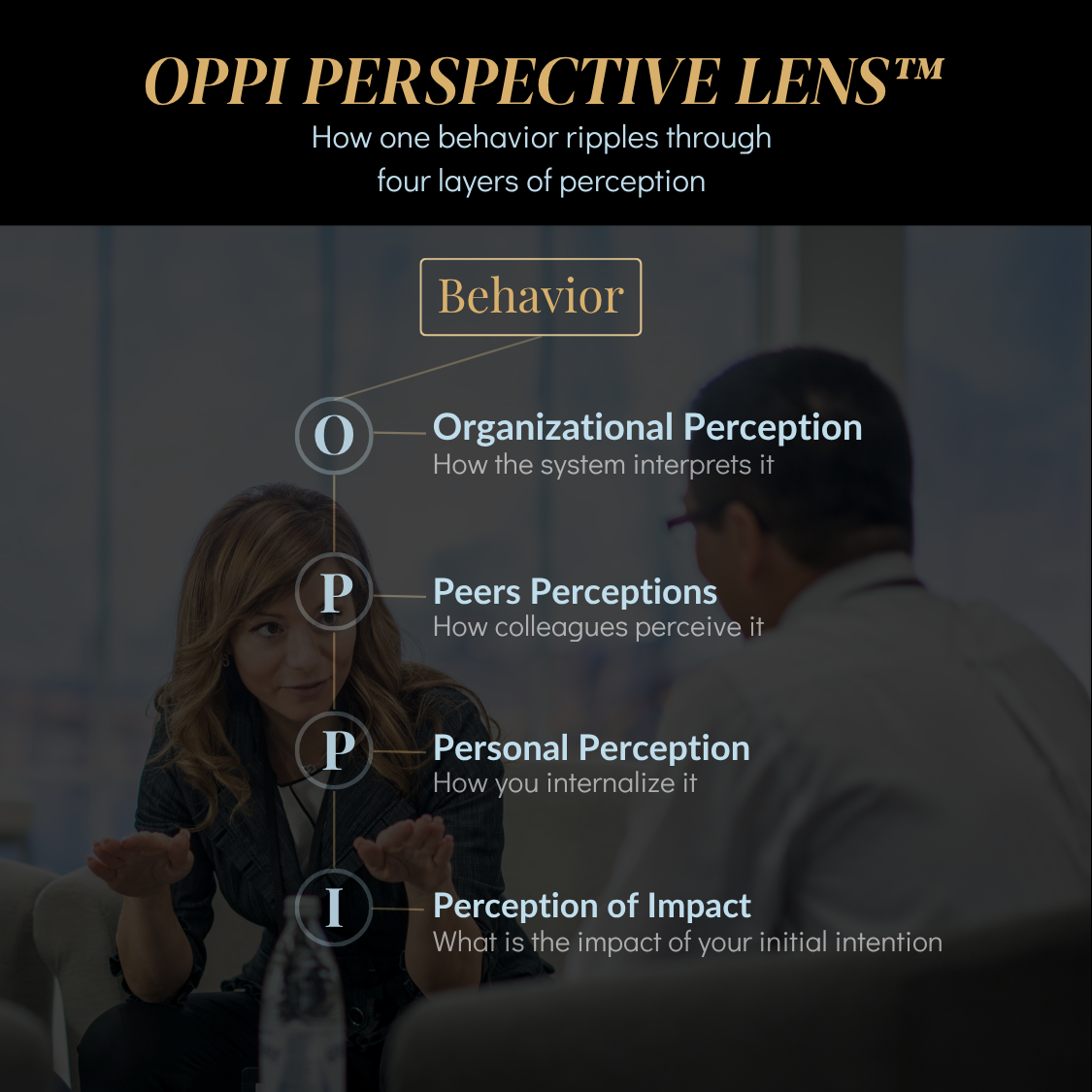
The OPPI Perspective Lens™, developed by MJ Michaud, is a framework for analyzing organizational dynamics through differences in perception. It shows how the same behavior can be interpreted and experienced differently across a system.
It is based on the idea that outcomes are shaped not only by intentions and actions, but by gaps in perception between individuals, roles, and levels of the organization.
By linking intention, perception, and impact, the model helps identify misalignments between what is intended, understood, and experienced, and clarifies how trust, collaboration, and performance evolve over time.
(O) Organizational perception
Refers to how a situation, behavior, or decision is interpreted at the level of the organizational system as a whole.
(P) Peer perception
Refers to how a situation is experienced and interpreted by those directly involved with the leadership behaviors.
(P) Personal perception
Refers to an individual’s internal experience of a situation, including their subjective interpretation, emotions, intentions, and the meaning they assign to the experience, which ultimately influences their behavior.
(I) Perceived Impact
Refers to the observable effects of behavior outcomes; decisions, priorities, leadership quality, and organizational culture.
OPPI Perspective Lens™
in Action
Over time, many leaders notice a gap between their intentions and how their actions are perceived and interpreted within the organization.
These discrepancies are not only a matter of communication, but stem from perceptual dynamics that shape behavior, decisions, and culture.
The OPPI Perspective Lens™ makes these dynamics visible by linking three levels of analysis: intention, perception, and impact.
When applied to real-world leadership situations, it supports a clearer, more systemic understanding of complexity by helping to:
- identify sources of misunderstanding or tension
- detect early warning signs in team dynamics
- develop greater awareness of one’s own impact within the system
The following examples illustrate how these differences in perception play out in organizations.
A leader, often frustrated by juggling multiple demands, perceives his environment as chaotic and difficult to manage. He feels he must constantly adapt, with limited real control over the situation.
Yet he also recognizes that responding to requests makes him feel useful. As a result, he accepts most demands and replies to messages even during meetings.
These behaviors seems to signal availability and commitment, while reinforcing his own sense of contribution and usefulness.
✦ OPPI Perspective Lens™ assessment of leadership behavior:
Organizational perception: a culture of urgency gradually becomes the unspoken norm in team operations
Peer perception: high commitment, but availability that may also appear fragmented and inconsistent
Personal perception: growing mental overload and possible guilt linked to constant shifts in attention
Perceived impact: reduced strategic clarity, prioritization, and decision quality, ultimately weakening leadership effectiveness
✦ Link between intention, perception, and impact:
Initial intention: to be helpful and support others and the organization
Evolving perceptions: increasing mental load and fragmented attention, leading to delayed responses, reduced listening quality, and rising impatience in interactions
Leadership impact: a culture where urgency dominates, and responsiveness gradually replaces presence, clarity, and strategic credibility
Example No. 2 - Team Dynamics
A team has been working for several months on a cross-functional project involving multiple departments. Over time, tensions emerge around deadlines, shared responsibilities, and differing levels of engagement.
In meetings, some members perceive that others contribute less, speak up less, or show limited initiative in moving the project forward.
Gradually, each person begins to interpret behaviors through their own perception of the situation.
✦ OPPI Perspective Lens™ assessment of leadership behavior:
Organizational perception: influence in the group increasingly aligns with visibility, responsiveness, and perceived contribution to project progress and deadlines
Peer perceptions: some members perceive uneven engagement or initiative, while others feel uncertain about their place and level of recognition within the team
Personal perception: growing frustration, uncertainty, and a sense of not being fully heard or able to influence the direction of the work
Perceived impact: weakening collaboration, reduced psychological safety, and less fluid collective decision-making
✦ Link between intention, perception, and impact:
Initial intention: to move the project forward effectively and maintain high team performance
Evolving perceptions: differences in pace, communication, and participation begin to be interpreted as disengagement or lack of alignment
Impact on team dynamics: gradual erosion of trust and psychological safety, reducing idea-sharing and weakening overall collaboration quality
Understanding the interplay between intention, perception, and impact in your leadership role.
Understanding these dynamics is the first step. Turning them into concrete leadership tools is another. The OPPI Perspective Lens™ is used in MJ Michaud’s executive coaching sessions to help leaders identify their blind spots, adjust their behaviors, and strengthen the real impact of their leadership in their environment.

Getting Support using the OPPI Perspective Lens™
Help leaders understand the gaps between their intentions, the perceptions they create, and the observable impacts in their environment when faced with complex, one-off leadership situations.
- decision-making
- leadership style
- overload and prioritization
- communication and mobilization
Develop a more conscious and sustainable ability to observe how behaviors, perceptions, and interactions influence human and organizational dynamics over time.
- impact awareness
- emotional intelligence
- metacognition
- A systemic perspective on leadership
Help teams better understand how perceptions influence relationships, collaboration, and teamwork.
- relationship tensions
- cross-team collaboration
- recurring misunderstandings
- team atmosphere
Support organizations in assessing the human and cultural impacts associated with changes and operational practices.
- organizational change
- corporate culture
- alignment between leadership and culture
- adoption of new practices